
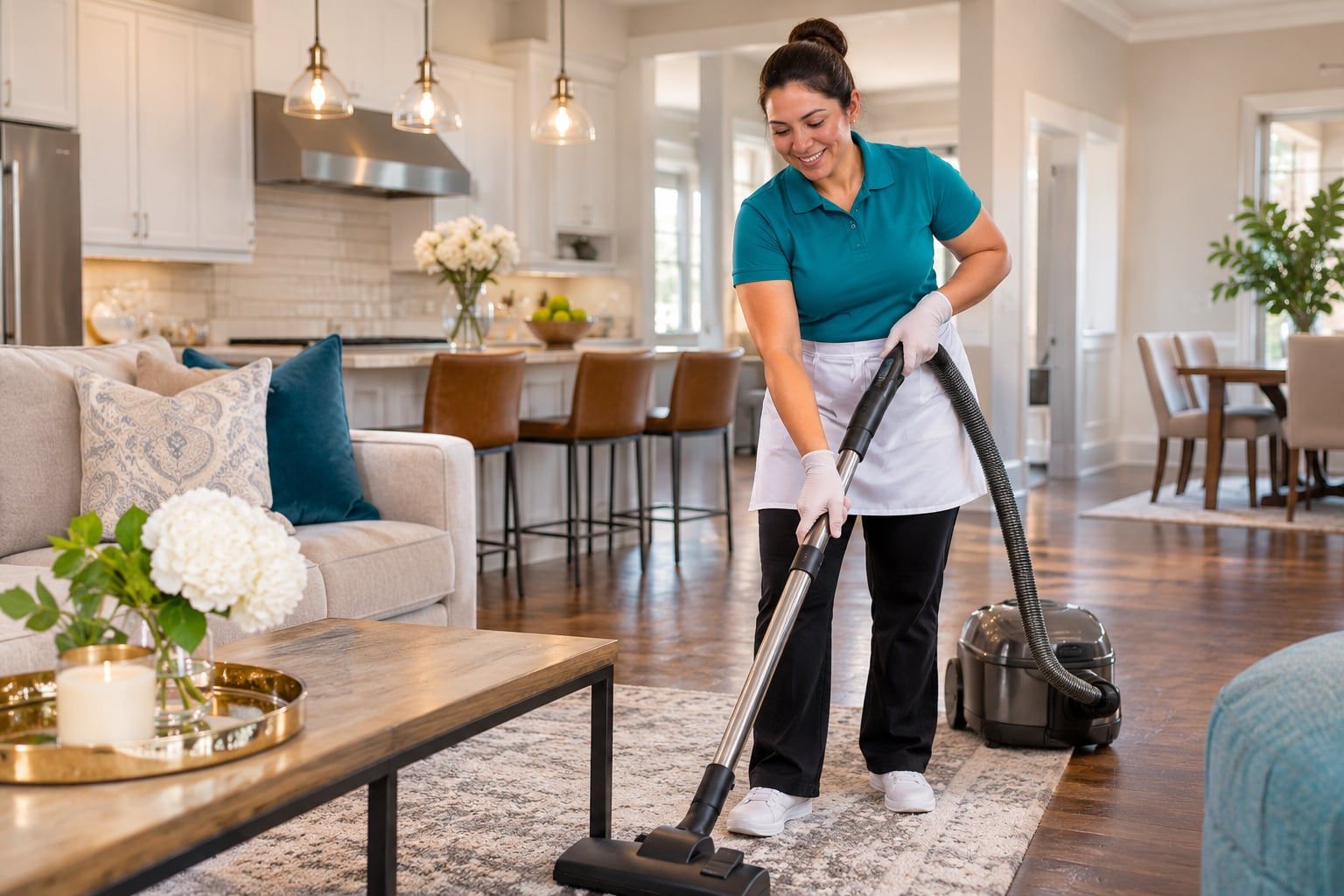
At a glance
- Hair travels along air currents and traffic lines, so the heaviest spots are stairs, hallways, bedroom doorways and under beds and sofas.
- A larger home multiplies the surface area, which is why the visit length and frequency matter more than any single trick.
- Pick up pet beds, throws and toys before the visit so the floors can be reached; tell the office how many animals there are.
- Weekly or every-2-weeks visits hold hair levels steady; a deep clean resets a home that has gone months.
- We do not offer carpet shampooing or steam cleaning, and we do not handle pet care.
Why a large household feels different
One dog in a small home sheds into a small space. Two dogs and a cat in a two-story house with an open stair, a game room and four bedrooms spread the same hair over many more square feet and many more edges. Hair also settles unevenly. Air from the HVAC system and the foot traffic between the kitchen, the back door and the couch push it into lines and drifts instead of leaving it where the pet dropped it.
That is why the same weekly effort that works in an apartment can leave a large home feeling behind. The task is not harder in kind; it is bigger in scale, and it helps to plan around where the hair gathers rather than cleaning the whole house evenly.
The places hair collects in a big home
If you walk the house at floor level, you will see the same spots repeating. They are worth knowing, because they tell you what to mention when you book.
- Stair edges and open-riser steps: hair lodges in the corners where tread meets riser and along iron balusters.
- Under furniture: sofas, beds and game-room sectionals trap drifts that a quick sweep never reaches.
- Baseboards and door frames: hair clings along trim, especially on slightly textured paint.
- Return vents and air registers: hair and fine dust collect on grilles near where the pets sleep.
- Laundry and mudroom: the pet’s feeding spot, towels and the back door see the most traffic.
- Upholstery edges and throws: the places the animal sleeps leave a layer that is easy to forget.
Under furniture, baseboards, door frames, air vents and returns are all on the deep checklist. A standard visit covers floors, surfaces and the ordinary pattern; it is not meant to reach every one of these on a first visit to a heavily affected home. Read the cleaning for pet owners page to see how pet households are scheduled.
How much prep helps before the visit
The cleaners can vacuum and mop what they can reach. Whatever sits on the floor stays where it is or gets moved aside, which uses the visit on logistics instead of dirt. A quick reset before the visit pays off disproportionately in a big house.
- Pick up pet beds, blankets and toys and place them on a chair or in a single room.
- Put out of the way anything that lies on stairs: leashes, shoes, the pet gate.
- Close bedroom doors where a pet should not be, and let the office know about animals that may be loose.
- Mention any area you want left alone, such as a kennel room or a bird cage.
- Leave pet food and water bowls where they are; the cleaners will work around them.
The general preparation steps, including keys, access and being home, are covered on the FAQ page. This list is only the pet-specific part.
Choosing a rhythm: weekly, every 2 weeks, or a reset first
A home with heavy shedding does best on a short cycle. Weekly visits are the lowest price per visit in the plan range and hold hair levels steady. Every 2 weeks works for many households with one or two pets. Every 4 weeks leaves enough time between visits that drifts form again, which is fine for lighter shedders and for homes that are tidied between visits.
If hair has been building for several months, a deep clean first gets the edges, trim and vents back to a baseline, and the plan keeps them there. The plan pricing and the minimum number of visits are explained in recurring cleaning. Prices come from bedrooms, bathrooms and size, not from the number of pets, and the amounts sit on the pricing page.
Large and multi-story homes take longer than the typical durations we quote, so tell the office about stairs, bonus rooms and second living areas. The large home cleaning page explains how those homes are scoped.
What to do between visits
The best use of your time is the high-traffic lines, not the whole house. A few minutes on those keeps the next visit focused.
- Brush or groom the animal outside or in one room, so hair does not shed through the house.
- Run a vacuum on the stairs and the main walkway twice a week, edges first.
- Wash throws and pet bedding on a regular rhythm; the wash needs its own load.
- Keep a lint roller or a damp rubber glove by the sofa for quick passes on upholstery.
- Wipe the base of the back door and the feeding area, where pet traffic is heaviest.
Setting the right expectations
Pet hair does not stop falling the moment the cleaner leaves. A home with an active shedder will show a light layer again within a day or two, and that is normal. What a visit gives you is a clean baseline: floors vacuumed and mopped, edges and surfaces wiped, and the hidden spots handled on a deep clean. If the checklist missed an area, tell us within 24 hours and we re-clean it at no extra cost.
We do not shampoo or steam-clean carpets, and we do not offer pet care, walking or feeding. Cleaners bring supplies and equipment, eco-friendly products included. If you need a specific product avoided, read our note on product preferences.
To plan a visit for a multi-pet home, book online and see the exact price before you confirm, or request a free quote if the house is beyond the largest size band. The office is also on the phone at (737) 265-3593, every day from 9 AM to 6 PM Central.